
The “Forever Chemicals” Problem — and Why the Filtration Industry Is Taking Notice
You may have heard the term PFAS in the news, in environmental reports, or increasingly in conversations with customers and regulatory bodies. But what exactly are PFAS, why do they matter in the context of filter cartridges, and what does compliance actually mean for your operation?
At BLF, we believe our customers deserve clear answers — and the documentation to back them up.

* BLF-PLE-HE Series – Pleated Synthetic Filter Cartridges
What Are PFAS?
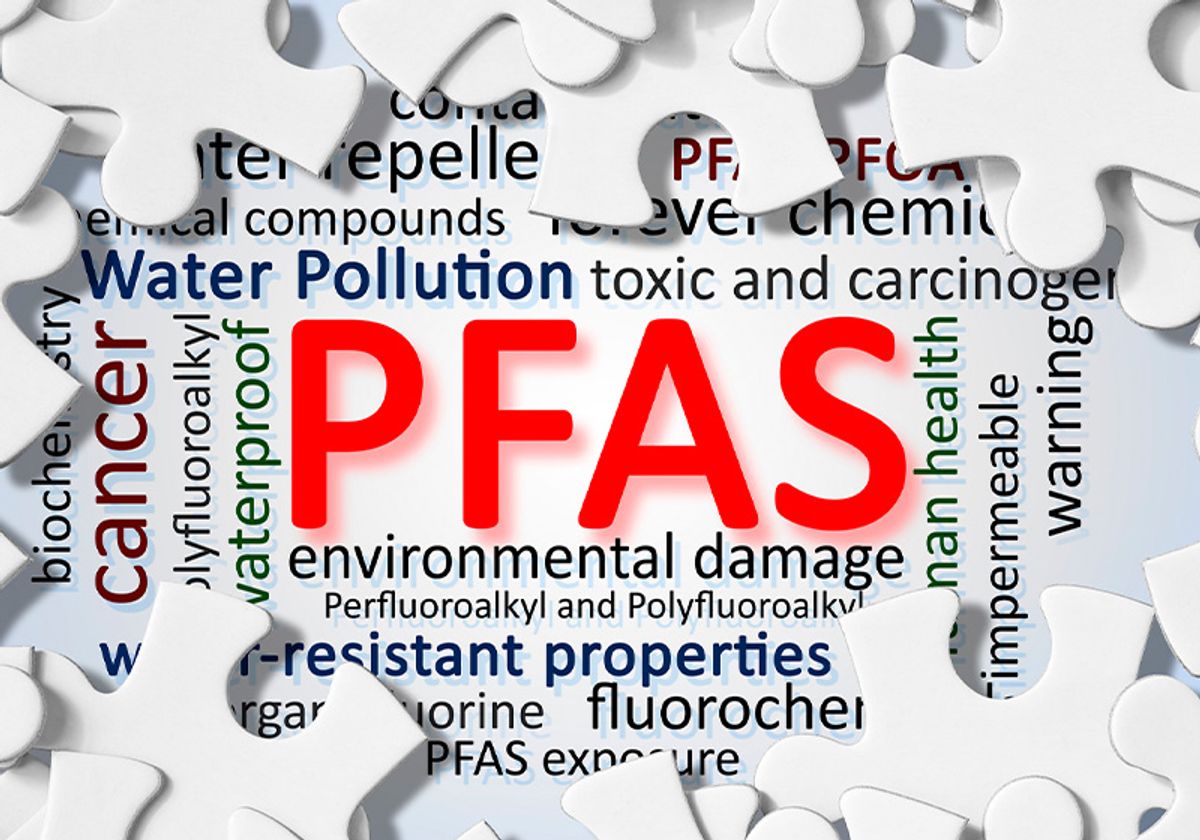
PFAS stands for Per- and Polyfluoroalkyl Substances — a broad family of several thousand synthetic chemicals that have been widely used in industrial and consumer products since the 1950s. You will find them in non-stick coatings, water-repellent textiles, food packaging, firefighting foams, and a wide range of industrial processing aids.
What makes PFAS so effective in many applications is exactly what makes them so problematic: the carbon-fluorine bond is one of the strongest in chemistry. PFAS do not break down naturally in the environment, in the human body, or in most conventional water treatment processes. This is why they are commonly referred to as “forever chemicals.”
Over time, PFAS accumulate in soil, groundwater, surface water, wildlife, and human tissue. Scientific evidence has linked prolonged PFAS exposure to a range of serious health concerns, including certain cancers, hormonal disruption, immune system effects, and developmental issues in children. Regulatory agencies across the world have been tightening restrictions as the body of evidence grows.
The EU Is Acting: Regulation (EU) 2025/40 (PPWR)
The European Union has been at the forefront of PFAS regulation. The Packaging and Packaging Waste Regulation (PPWR), Regulation (EU) 2025/40, introduces specific requirements around PFAS content in packaging and related materials. Article 5(5) of this regulation sets strict limits on PFAS concentration, with individual substance limits of 0.025 mg/kg and a total PFAS sum limit of 0.25 mg/kg.
This regulation reflects a broader EU direction under the REACH framework and the Chemicals Strategy for Sustainability, which aims to phase out non-essential uses of PFAS across industries. For manufacturers, distributors, and end users in Europe, compliance is not optional — it is a legal requirement that will increasingly shape procurement decisions.
For process industries that rely on cartridge filtration — food and beverage, dairy, pharmaceuticals, water treatment, and more — this raises an important and direct question: do your filter cartridges contain PFAS?
Why Filter Cartridges Specifically?
Filter cartridges are in direct contact with the fluids you process. Whether you are filtering drinking water, beer, wine, dairy products, or pharmaceutical-grade liquids, the integrity of the filtration media, support cage, end caps, and seals matters enormously. Any chemical migration from filter components into the product stream is a concern — and PFAS, given their persistence, are particularly undesirable.
Historically, certain fluoropolymer-based filter media and processing aids used in membrane manufacturing have raised questions about PFAS content. As the regulatory environment tightens and customer awareness grows, demonstrating that your filtration products are PFAS-free is no longer a nice-to-have. It is increasingly a baseline expectation in food safety, pharmaceutical GMP, and water treatment contexts.
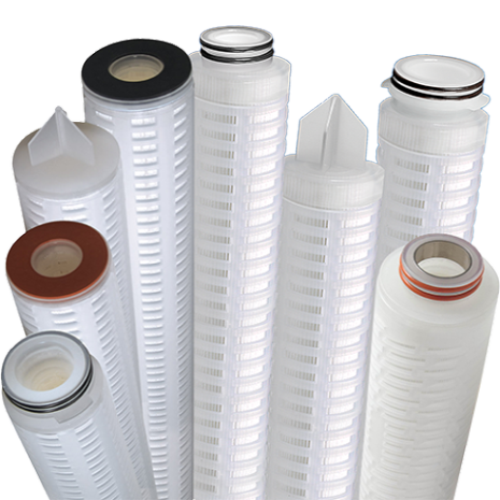
** BLF-PLE-HE Series – Pleated Synthetic Filter Cartridges
Independent Verification: Why SGS Testing Matters
Claiming compliance is one thing. Proving it with independent, third-party laboratory data is another — and it is what gives customers genuine confidence.
Our filter cartridges — the BLF-PLE-HE Series — have been independently tested by SGS, one of the world’s leading inspection, verification, testing, and certification companies. SGS operates globally and is widely recognised by regulators, retailers, and industrial customers as a trusted source of product compliance verification.
The testing was conducted according to Modified EN 17681-1:2025, with analysis performed by LC-MS/MS (Liquid Chromatography coupled with tandem Mass Spectrometry) — the gold-standard analytical method for detecting PFAS at trace concentrations. The test scope covered the full list of individual PFAS substances specified under the PPWR regulation, including::
- PFOS and its salts (Perfluorooctane sulfonic acid)
- PFOA and its salts (Perfluorooctanoic acid)
- C9–C14 perfluorocarboxylic acids (PFNA, PFDA, PFUnDA, PFDoDA, PFTrDA, PFTDA)
- PFHxS and its salts (Perfluorohexane sulfonic acid)
- PFHxA and its salts (Perfluorohexanoic acid)
The result across all tested materials and all filter types: every sample returned “Not Detected” (ND) for every individual PFAS substance, and the sum of PFAS was ND — well below the regulatory limits.
All four filter types received a clear Pass conclusion.

What Was Tested? The BLF-PLE-HE Filter Range
The SGS test programme covered four distinct filter media types within the BLF-PLE-HE series, reflecting the breadth of our product offering:
- PP (Polypropylene) Cartridge Filters: Polypropylene is one of the most versatile and cost-effective filter media options, widely used across water treatment, food and beverage, and general industrial applications. PP filters are the workhorse of the industry — and our SGS results confirm they are entirely PFAS-free.
- PES (Polyethersulfone) Cartridge Filters: PES membrane is a high-performance synthetic media widely used in fine filtration and sterile filtration applications. Its hydrophilic character, broad chemical compatibility, and low protein binding make it a preferred choice in food processing, beverages, and pharmaceutical applications.
- PTFE (Polytetrafluoroethylene) Cartridge Filters: PTFE membranes are praised for their exceptional chemical resistance and their suitability for aggressive solvents, acids, and gases. While PTFE itself is a fluoropolymer, our tested cartridges demonstrate that the finished filter product contains no detectable PFAS substances as defined under the PPWR regulation.
- PVDF (Polyvinylidene Fluoride) Cartridge Filters: PVDF offers an excellent balance of chemical resistance, mechanical strength, and thermal stability. It is frequently specified in demanding liquid filtration environments where robustness and long service life are priorities.
All cartridges in the BLF-PLE-HE series share a common construction philosophy: polypropylene core and end caps, polypropylene outer support cage, thermally bonded end cap attachment (ensuring zero bypass), and a choice of EPDM, Buna-N, Silicone, Viton, or Teflon O-rings. They are manufactured in a clean-room environment and are available in sizes from 254 mm to 1,524 mm (10″ to 60″), with micron ratings from 0.04 to 70 micron depending on media type.
What This Means for Our Customers
- Regulatory Peace of Mind: If your business operates in the EU — or supplies to customers who do — you face increasing scrutiny around PFAS. Having independently verified, SGS-certified test reports for your filtration materials gives you a defensible compliance position and simplifies the documentation burden in audits, customer questionnaires, and regulatory submissions.
- Product Integrity: Whether you are producing bottled water, craft beer, fine wine, dairy products, spirits, or soft drinks, the last thing you want is chemical contamination risk from your process equipment. PFAS-free certification provides an additional layer of assurance that your filtration step is not introducing unwanted substances into your product.
- Supply Chain Transparency: Retailers, brand owners, and certification bodies are increasingly asking suppliers to demonstrate chemical compliance all the way through the supply chain. Independent test data from SGS supports your own customer-facing claims and helps you stay ahead of evolving requirements.
- Future-Proofing: PFAS regulations are tightening, not relaxing. The EU’s broader PFAS restriction proposal under REACH, which covers an estimated 10,000 PFAS substances, is advancing through the regulatory process. Choosing PFAS-compliant filtration products now is an investment in long-term supply chain resilience.
Applications Where PFAS Compliance Is Especially Relevant
The BLF-PLE-HE series is designed for critical filtration across a broad range of industries. PFAS compliance is particularly valuable in:
- Food & Beverage — Bottled water, mineral water, juices, soft drinks, beer and brewing, wine and spirits, dairy and fermentation. Direct product contact filtration demands the highest level of chemical assurance.
- Water Treatment — Municipal and industrial water treatment, process water purification, ultrapure water production. Regulatory compliance and public health protection go hand in hand.
- Biotech & Pharmaceutical — Sterile filtration, buffer and media filtration, API processing. GMP environments demand fully documented material traceability and compliance.
- Dairy — Whey processing, milk filtration, permeate clarification. Stringent food safety standards apply throughout.
- General Industrial Process — Chemical processing, electronics, surface finishing. Chemical resistance and material purity are key selection criteria.

Ready to Talk Filtration?
At BLF, we are committed to providing filter cartridges that meet the highest standards of quality, purity, and regulatory compliance. Our BLF-PLE-HE series — available in PES, PTFE, PVDF, and PP media — is now backed by SGS-certified PFAS test reports, giving you the documentation you need for today’s regulatory environment and confidence for tomorrow’s.Whether you need a standard configuration or a customised solution for your specific process, our team is ready to help you find the right filter for your application.
Get in touch with us at info@blf.com.pl or visit blf.com.pl to discuss your filtration requirements.
BLF Sp. z o.o. | Grabowiec 41b, 66-014 Grabowiec (Świdnica), Poland | +31 6 2021 5276 | info@blf.com.pl